



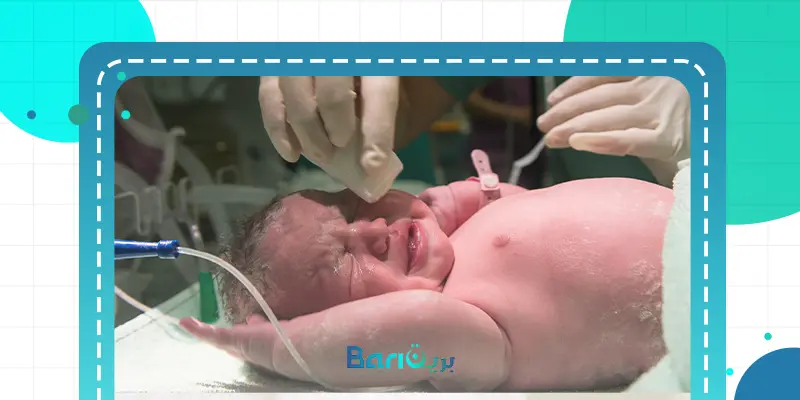
Glaucoma in newborns—also known as congenital glaucoma—is a condition that can threaten vision if its detection and treatment are delayed. Warning signs include persistent tearing, sensitivity to light, cloudiness of the cornea, or an enlarged eye. While these signs alone are not sufficient for a diagnosis, they warrant an examination by a pediatric ophthalmologist to determine the underlying cause and an appropriate treatment plan.
In this article, we explore the symptoms and causes, the distinction between glaucoma and a blocked tear duct, methods of diagnosis and treatment, what success rates for surgery mean, and the follow-up care a child requires post-surgery.
What is glaucoma in newborns?
Glaucoma, or congenital glaucoma, occurs when intraocular pressure rises due to an impairment in the drainage of the aqueous humor (the fluid inside the eye). If this elevated pressure persists, it can damage the optic nerve—which transmits visual signals to the brain—and may also affect the clarity of the cornea and the shape of the eye.
The condition may be present at birth or discovered in the months that follow. It is important to note that glaucoma refers to an internal ocular disorder, not an accumulation of tears on the surface of the eye; therefore, its treatment differs from that of a blocked tear duct.
Symptoms of Glaucoma in Newborns
Families may notice one or more of the following signs; it is not necessary for all symptoms to appear simultaneously:
- Excessive Tearing: Frequent or persistent tearing without an obvious cause.
- Sensitivity to Light (Photophobia): The child may appear uncomfortable in bright light or squeeze their eyes shut when exposed to it.
- Cloudy Cornea: A haziness or cloudiness in the clear, front part of the eye, rather than its typical, transparent appearance.
- Enlarged Eye or Cornea: The difference may be more noticeable when comparing the two eyes.
- Difficulty Opening the Eyes and Frequent Discomfort: Especially when accompanied by tearing or visible changes to the eye.
When Should You See a Doctor Immediately?
If you notice a cloudy cornea, a noticeable increase in the size of the eye, or tearing accompanied by severe light sensitivity, contact an ophthalmologist urgently—do not wait for a routine check-up. While these signs do not definitively confirm glaucoma, a prompt examination helps identify issues that could affect the child’s vision.
To schedule an examination for your child at Bareeq Center, please contact the center and provide the child’s age along with the signs you have observed.
Does Excessive Tearing Indicate Glaucoma or a Blocked Tear Duct?
Both conditions involve excessive tearing, but they have different causes and require different treatments. A blocked tear duct prevents tears from draining from the surface of the eye into the nose; this may also be accompanied by discharge or the eyelids sticking together. Congenital glaucoma relates to the drainage of fluid from within the eye and an increase in intraocular pressure.
Severe light sensitivity, a cloudy cornea, or an enlarged eye are signs that should not be dismissed as merely a blocked tear duct. Do not rely on informal, at-home assessments to determine the cause, and do not delay a professional examination by attempting to use eye drops or massage techniques without a medical evaluation.
Causes of Glaucoma in Newborns
The primary cause of congenital glaucoma is a developmental defect in the eye’s fluid-drainage angle, which hinders the normal outflow of fluid and leads to increased pressure. Genetic factors may also play a role, regardless of whether there is a known family history of the condition.
What is the difference between primary and secondary congenital glaucoma?
- Primary Congenital Glaucoma: The core issue lies in the formation of the eye’s fluid-drainage system, with no other underlying ocular or systemic disorder to explain it.
- Secondary Glaucoma in Children: This is associated with other conditions affecting the eye—such as certain congenital malformations or a history of eye surgery—and may also be linked to the use of corticosteroids. These are general causes of glaucoma in children, though not all are present from birth.
Identifying the specific type is crucial, as treatment plans vary accordingly. Therefore, be sure to inform your doctor about any family history, previous surgeries, or medications used. Furthermore, never administer eye drops containing corticosteroids to your child without medical guidance.
How is glaucoma diagnosed in newborns?
Diagnosis is based on a comprehensive examination by a pediatric ophthalmologist; it is not determined solely by the appearance of the eye or a single intraocular pressure reading. The evaluation may include:
- Measuring intraocular pressure and interpreting the results in the context of other clinical findings.
- Examining the size, clarity, and thickness of the cornea.
- Assessing the optic nerve and the eye’s fluid drainage angle.
- Measuring the dimensions of the eye and assessing refractive error to monitor visual development.
In some cases, an infant may need to be examined under anesthesia to obtain accurate measurements; the physician will determine this based on the child’s age and whether a thorough examination can be performed in the clinic. Be sure to ask about the required tests and any preparation instructions, and bring along any existing medical reports or information regarding eye drops previously used.
Treatment for glaucoma in infants
The goal of treatment is to lower intraocular pressure and prevent further damage, while also supporting the child’s visual development. For primary congenital glaucoma, surgery is often the primary treatment, whereas for certain secondary forms of the condition, the treatment plan may begin with medication, depending on the underlying cause and the findings of the examination.
Are eye drops sufficient to treat glaucoma in infants?
Eye drops alone are generally not a sufficient long-term solution for primary congenital glaucoma. A doctor may prescribe them before or after surgery to help lower intraocular pressure. It is essential to strictly follow the prescribed medication and dosage for the child; never use eye drops intended for adults, and do not discontinue treatment—even if the appearance of the eye improves—without first consulting the doctor.
Glaucoma surgery for infants: How is it performed?
Common surgical options include procedures targeting the angle of the eye, such as a goniotomy (incising the angle from within) or a trabeculotomy (opening the trabecular meshwork), both of which aim to improve fluid drainage.